
El INURA está integrado por grupos de investigación interdisciplinares que pueden abordar problemáticas del sector agroalimentario desde la producción de las materias primas hasta la calidad del alimento final y su impacto en la salud.
La productividad científica de los miembros del INURA es un indicador clave de su impacto y crecimiento académico, mostrando una tendencia ascendente en la obtención de fondos de I+D+I a través de convocatorias competitivas y contratos con empresas.
Esto se ha traducido en una amplia producción de artículos científicos que se ha incrementado notablemente en los últimos 5 años.
Dentro de este contexto, la actividad científica desarrollada en el INURA se concentra en cuatro líneas de investigación:
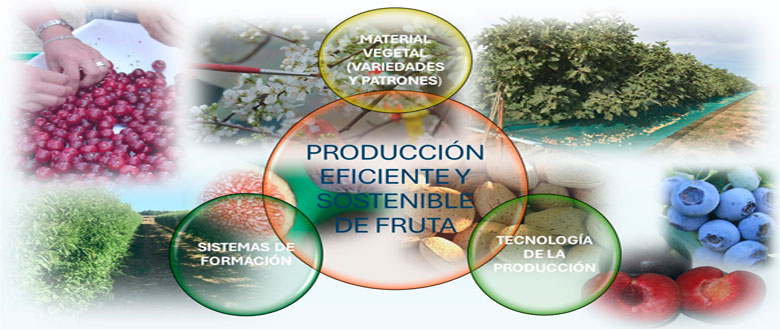
El objetivo es el desarrollo e innovación en las prácticas agrícolas con énfasis en mejorar su sostenibilidad y adaptación al cambio climático y optimización de los recursos, promoviendo métodos para reducir la variabilidad y la estacionalidad en la producción agraria garantizando su calidad.
Espinosa, F., et al. (2026). Effects of High Lithium Concentrations on the Growth, Biomass, Mineral Accumulation, Oxidative Stress, Antioxidant and Gene Expression Response, and DNA Methylation in Sunflower Plants. Plants, 15(3), 421.
Escribano, M., et al. (2026). Assessing the potential of CAP 2023 Agri-environmental schemes for Mediterranean agroforestry livestock systems: A Delphi approach. Science of the Total Environment, 1022, 181617.
Valdés, M. E., et al. (2026). Nitrogen composition in cv. monastrell berries under climate change: the role of vineyard management. Journal of Agriculture and Food Research, 102663.
Uriarte, D., et al. (2025). Quantifying the Effects of Water Status on Grapevine Vegetative Growth, Yield, and Grape Composition Through a Collaborative Analysis. Australian Journal of Grape and Wine Research, 2025(1), 1588228.
Honorio, F., et al. (2025). Climatic Structure Analysis of Olive Growing in Extremadura, Southwestern Spain. Land, 14(4), 789.
Crespo-Cotrina, N., et al. (2025). A Simple Aridity Index to Monitor Vineyard Health: Evaluating the De Martonne Index in the Iberian Peninsula. Applied Sciences, 15(19), 10605.
Horrillo, A., et al. (2025). Integrated assessment of greenhouse gas emissions in extensive livestock farming systems. Scientific Reports.
García-Latorre, C., et al. (2024). Exploring Trichoderma Diversity for Sustainable Disease Management in Lolium perenne Against Fusarium avenaceum. Journal of Crop Health, 76(6), 1447-1462.
Prat-Benhamou et al. (2024). How do farm and farmer attributes explain perceived resilience?. Agricultural Systems, 219, 104016.
Gutiérrez-Cabanillas et al. (2024). Can the Carbon Dioxide Fixation of Processing Tomato Plants Compensate for the Emissions of the Tomato Industry?. Agriculture 2024, 14(8), 1267.
Espinosa-Vellarino et al. (2024). Enzymes Involved in Antioxidant and Detoxification Processes Present Changes in the Expression Levels of Their Coding Genes under the Stress Caused by the Presence of Antimony in Tomato. Plants, 13(5), 609.
Moral, F. J., et al. (2024). Spatial and Temporal Analysis of Water Resources in the Olive-Growing Areas of Extremadura, Southwestern Spain. Land, 13(8), 1294.
HORIZON-CL6-2021-CLIMATE-01; Internacional (Resilient livestock farming systems under climate change); Facilitating innovations for resilient livestock farming systems: re-livestock; I.P.: Gerardo Moreno Marco; 09/2022-09/2027 (Colaboración con Indehesa).
HORIZON-CL6-2021-CLIMATE-01-08; Internacional (Agroforestry to meet climate, biodiversity and farming sustainability goals); Digital solutions to help agroforestry meet climate, biodiversity and farming sustainability goals: from field to cloud – digitaf; I.P.: Gerardo Moreno Marcos; 09/2022-09/2026 (Colaboración con Indehesa).
LIFE20 NAT/ES/001477; Internacional (Life); Sustainable agrarian approaches for agro-steppe species and habitats conservation in Nature 2000; I.P.: Francisco Hernández; 09/2021-08/2026.
PID2022-137688OB-I00; Nacional (Agencia Estatal de Investigación); Impacto del estrés hídrico y térmico en quinoa y amaranto: dos cultivos con capacidad de contribuir a la diversificación de la agricultura y a la seguridad alimentaria; I.P.: María Reguera Blázquez; 09/2023-09/2027.
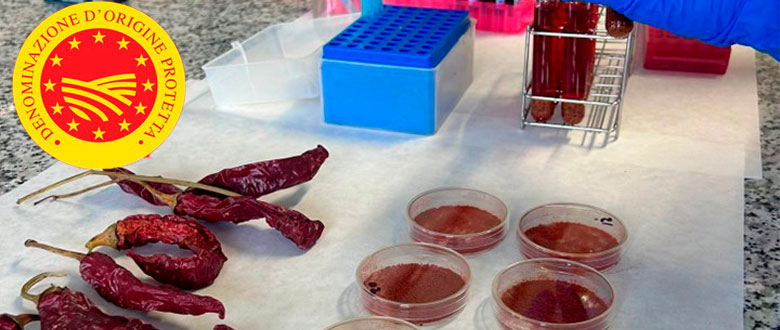
Esta línea se enfoca en el desarrollo de estrategias que mejoren las cualidades organolépticas, nutricionales y funcionales de los alimentos, promoviendo la producción de alimentos seguros con un impacto positivo en la salud del consumidor.
EE2503 (2026/00142/001); Regional (Junta de Extremadura); Impulso al aprovechamiento de la bellota para la alimentación humana; I.P.: María José Benito Bernáldez y Juan Ignacio Gutiérrez, 02/2026-01/2028.
MOREMEDDIET; PCI2023-143380; Internacional (PRIMA); More on the adoption of a healthy mediterranean diet. Agencia estatal de investigación; I.P.: María de Guía Córdoba; 06/2023-05/2026.
GO HIGOS; Nacional (Ministerio de Agricultura, Pesca y Alimentación); Grupo Operativo Aplicación de Estrategias Innovadoras en el sector del higo seco español para una máxima calidad higiénico-sanitaria; I.P.: Margarita López Corrales, Manuel Joaquín Serradilla y Alicia Rodríguez; 01/2026-12/2029.
FIGGEN; Internacional (PRIMA); Valorising the diversity of the fig tree, an ancient fruit crop for sustainable Mediterranean agricultura. I.P.: Tommaso Giordani; Iñaki Hormaza; Margarita López Corrales. 04/2020-03/2024.
PID2023-149818OB-I00; Nacional (Agencia Estatal de Investigación); Desarrollo de nuevo fungicida biológico basado en levaduras antagonistas y compuestos orgánicos volatiles encapsulados para prolongar la vida útil de frutas y hortalizas; I.P.: Alberto Martín y Alejandro Hernández; 09/2024-09/2028.
PID2020-115359RR-C22; Nacional (Agencia Estatal de Investigación); Implementación de sistemas superintensivos y gestión de estrategias precosecha innovadoras para la obtención de higos de elevada calidad estándar e higiénico-sanitaria tanto para consumo en fresco como en seco (INNOFIG); I.P.: Margarita López Corrales, Manuel Joaquín Serradilla y Alicia Rodríguez; 09/2021-08/2025.
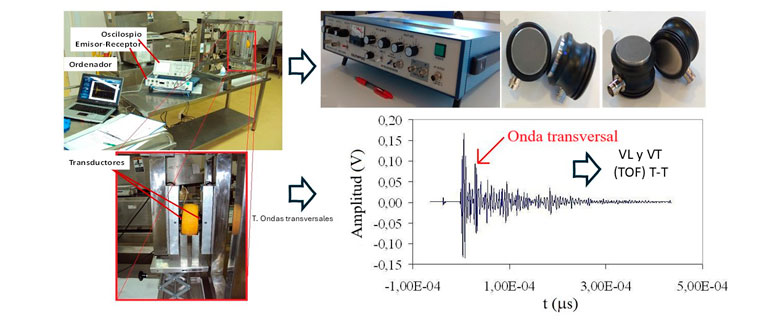
Esta línea se enfoca en la transformación innovadora en los productos agroalimentarios, utilizando la biotecnología en el procesado de alimentos para mejorar su calidad, seguridad y valor nutricional, así como la optimización de tecnologías no destructivas para el control de la calidad en línea durante el proceso de producción los materias primas y alimentos.
IB24021; Regional (Junta de Extremadura); Impacto y evolución de la exposición a telefonía móvil 5G en la población de Extremadura; I.P.: María de la Montaña Rufo Pérez; 11/2025-11/2028.
IB24085; Regional (Junta de Extremadura); Digitalización de la Evaluación Sensorial en la Cadena Agroalimentaria de la Aceituna de Mesa mediante Nariz y Visión Electrónicas con Inteligencia Artificial; I.P.: Ramiro Sánchez Baltasar; 11/2025-11/2028.
IB24180; Regional (Junta de Extremadura); Desarrollo de Narices Electrónicas para la Orientación Sensorial en Personas Anósmicas (NEOS); I.P.: Jesús Lozano Rogado; 11/2025-11/2028.
PID2024-156779OA-I00; Nacional (Agencia Estatal de Investigación); Development of new methodologies for the authentication of differentiated quality cheeses; I.P.: Alberto González-Mohino Jiménez; 09/2025-08/2028 (Colaboración con Iprocar).
PID2023-147742OB-I00; Nacional (Agencia Estatal de Investigación); Nuevas estrategias para el desarrollo de derivados cárnicos con bajo contenido en sodio; I.P.: Jorge Ruiz Carrascal y María Trinidad Pérez Palacios; 09/2024-08/2028 (Colaboración con Iprocar).
PID2023-151565OB-C43; Nacional (Agencia Estatal de Investigación). desarrollo de sensores para compuestos orgánicos volátiles integrados en sistemas de medida de calidad del aire; I.P.: Jesús Lozano Rogado; 09/2024-12/2027.
PDC2023-145853-C41; Nacional (Agencia estatal de Investigación); Sistema sensorial inteligente y modular para la detección de gases y compuestos volátiles en la producción de hortalizas; I.P.: Jesús Lozano Rogado; 05/2024-05/2024.
TED2021-131114B-C21; Nacional (Agencia estatal de Investigación); Smart detection systems based on novel materials and machine learning for air quality monitoring; IP: Jesús Lozano Rogado; 12/2022-12/2024
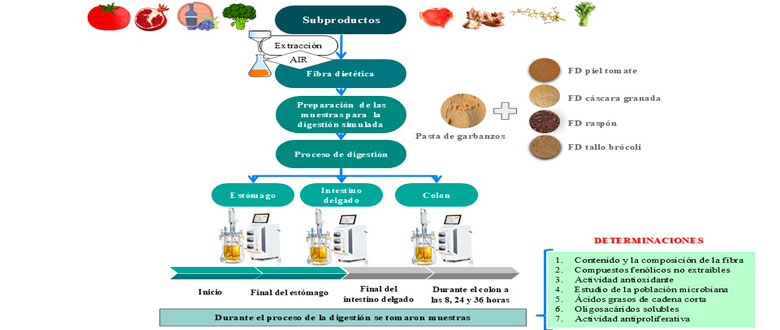
La industria agroalimentaria genera una gran cantidad de subproductos, los cuales representan una fuente inexplorada de nutrientes y compuestos bioactivos. Nuestra investigación se centra en desarrollar procesos de extracción innovadores y sostenibles para recuperar estos compuestos de manera eficiente. El objetivo es evaluar sus propiedades funcionales y explorar nuevas aplicaciones en la industria alimentaria y más allá, promoviendo una economía circular.
I3-LIGNIN2VALUE (101309827); Internacional, Call: I3-2025-INV1; Type of action: I3- PJG; Título: Unlocking Interregional innovation investments for valorization of lignin and forest resources. I.P.: María José Benito Bernáldez; 05/2026-04/2029.
IB24114; Regional (Junta de Extremadura); Valorización de subproductos vegetales como fuente de lignanos con propiedades bioactivas, prebiótica y postbiótica; I.P.: Rocío Casquete Palencia; 11/2025-11/2028.
IB24228; Regional (Junta de Extremadura); Desarrollo sostenible para el aprovechamiento integral del destrío de cereza: de residuo a materia prima funcional; I.P.: María Garrido Álvarez; 11/2025-11/2028.
PRECAP; 101209763-GAP-101209763; Internacional; Call: MSCA Postdoctoral Fellowships 2024; Type of action: HORIZON TMA MSCA Postdoctoral Fellowships - European Fellowships; Título: Encapsulation of bioactive compounds from cherry waste with acetate-producing bacteria for the increase of intestinal butyrogenic bacteria; Supervisor: Santiago Ruiz-Moyano; Investigador: Marco Antonio Vega Sagardia.
En INURA queremos atraer talento y darte la oportunidad que mereces. Si crees que tu perfil es competitivo y puedes aportar a nuestras líneas de investigación, envíanos tu currículum a dir_inura@unex.es